Why a Machine Feels Easy on One Side and Hard on the Other
Quick Answer: Some left-right difference is normal — most people have a measurable asymmetry, and the dominant side is often somewhat stronger. On a machine, though, apparent differences are frequently created by seat position, uneven hand or foot placement, or a slight torso rotation, rather than by strength. Check the setup first and only then treat it as an imbalance.
The fix, when it is real, is unilateral work — not avoiding the machine.

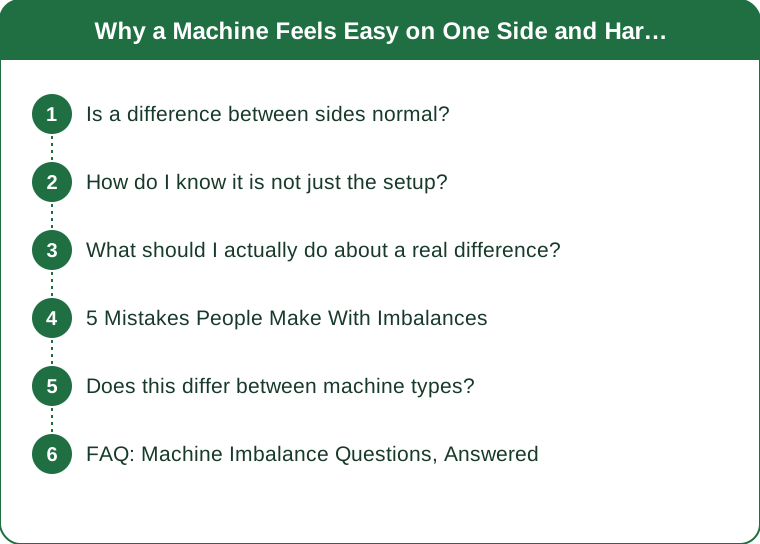
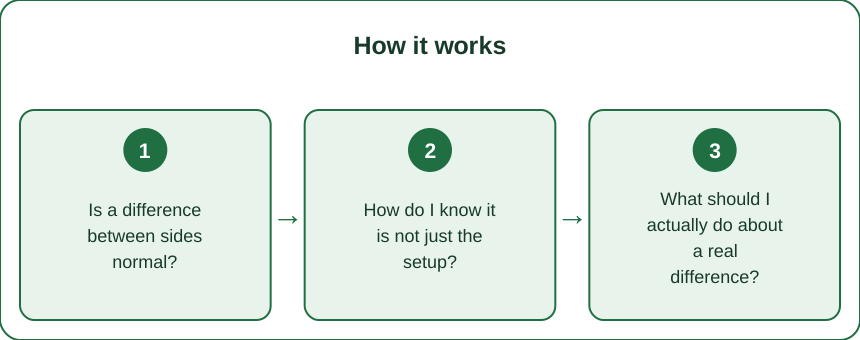
Is a difference between sides normal?
Yes, and it is close to universal. Handedness, sport history, previous injuries and daily habits all produce asymmetry, and a modest difference has no particular clinical meaning in most people.
What matters is the size and the trend. A small consistent difference is unremarkable. A large one, or one that is growing, is worth investigating.
Pain changes the picture entirely. Weakness with pain is a different conversation from weakness without it, and warrants a professional assessment.
Recent injury explains many of these. Even a minor issue months ago produces protective patterns that persist long after it stops hurting.
How do I know it is not just the setup?
Check that you are square to the machine first. Sit fully back, both hips against the pad, feet symmetrically placed. A hip that is slightly forward changes the leverage on that whole side.
Match your hand or foot positions exactly. A two-centimetre difference in grip width on a chest press or lat pulldown produces a genuinely different feel between sides.
Look at the machine itself. Cables fray, pulleys stick, and one side of a plate-loaded machine can be stiffer than the other. Run it unloaded and feel for resistance differences.
Test the same movement with a dumbbell. If the difference disappears with free weights, it was the machine or the setup. If it persists, it is you.
Film yourself from the front. Torso rotation during the press or pull is extremely common and almost impossible to feel from the inside.
What should I actually do about a real difference?
Train unilaterally. Single-arm and single-leg versions of the movement remove the ability of the strong side to compensate, which is the reason bilateral work does not close a gap on its own.
Lead with the weaker side and match the reps. Do the weaker side first, note the number of reps at a given load, then do the same number on the stronger side rather than pushing to failure. This is the standard approach and it works.
Do not add extra sets for the weak side indefinitely. One or two extra sets per week is reasonable for a period. Sustained lopsided training creates its own problems.
Expect it to take months, not weeks. Strength gaps built over years do not close in a training block, and the first change is usually in coordination rather than in size.
Keep some bilateral work. The goal is a functional body, not perfect symmetry, and heavy bilateral lifts remain the most efficient way to build overall strength.
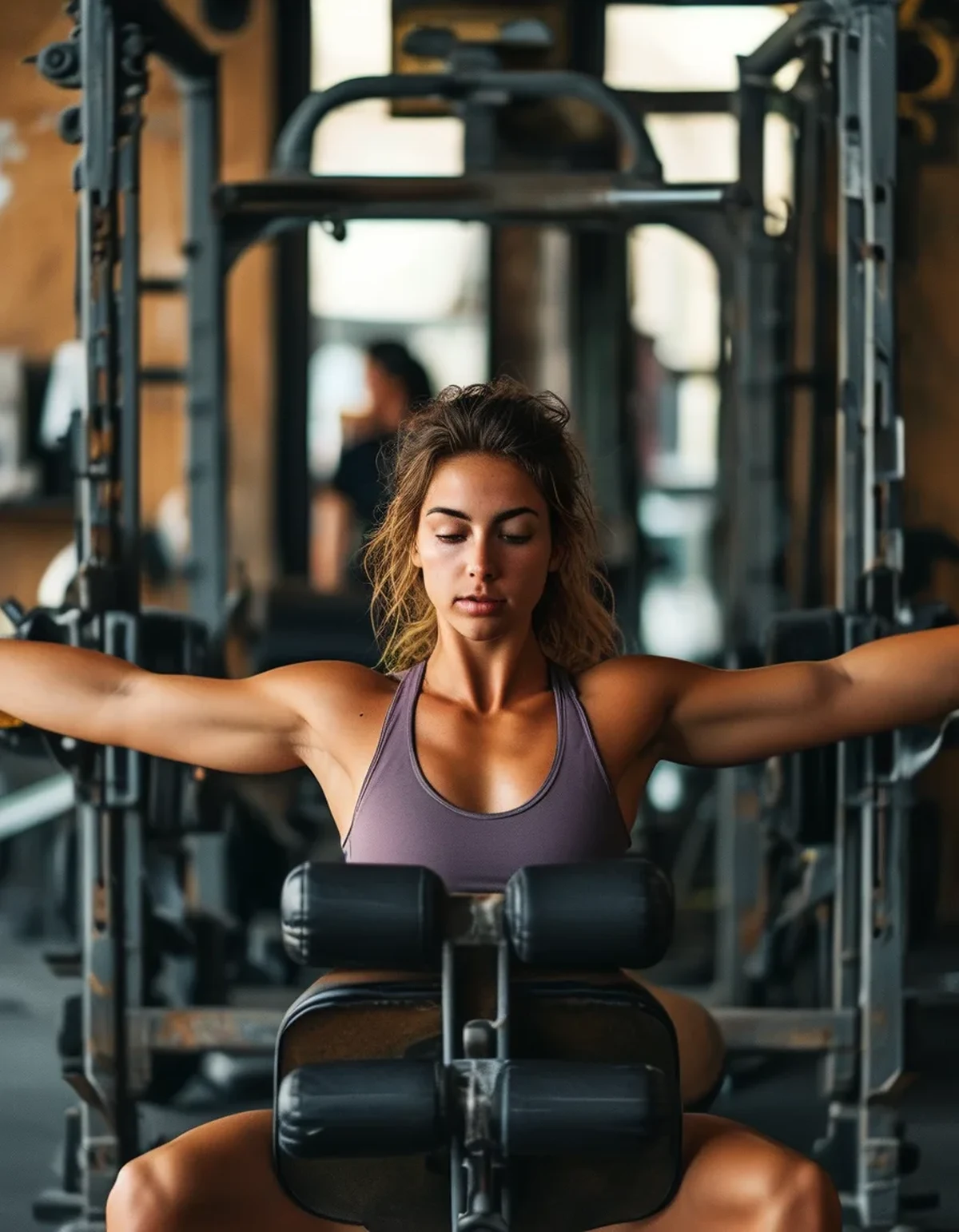
5 Mistakes People Make With Imbalances
1. Chasing perfect symmetry. Nobody is symmetrical and pursuing it produces endless corrective work with no endpoint.
2. Only training the weak side. The strong side detrains, the gap narrows, and total strength falls. That is not progress.
3. Assuming the weaker side is the problem side. Sometimes the stronger side is overactive and compensating, and the useful intervention is on the dominant side’s mobility rather than the other side’s strength.
4. Testing on a machine and concluding. Machine testing is confounded by setup. Test with dumbbells or a unilateral movement before drawing conclusions.
5. Ignoring pain because the difference explains it. An asymmetry does not explain pain. Pain gets assessed on its own terms.
Does this differ between machine types?
Selectorized machines with a single stack hide asymmetry. Because both sides are connected to one weight stack, the stronger side can quietly do more work and the difference never shows up in the number.
Plate-loaded machines with independent arms reveal it immediately, which is why they are the better diagnostic tool. If one arm lags at the same load, that is real information.
Cable stations sit in between. A single-arm cable movement is one of the cleanest ways to test each side under controlled resistance.
Leg press is the most confounded of all. Small differences in foot placement change the loading dramatically, so it is a poor test and a fine training tool.
For testing, use independent-arm or single-limb versions. For training, either is fine once you know what you are working with.
FAQ: Machine Imbalance Questions, Answered
How much difference is too much?
There is no universally agreed threshold, and context matters more than any number. A difference that is stable, painless, and not affecting technique is generally not urgent. One that is large, growing, or accompanied by pain deserves an assessment.
Will unilateral work make me lopsided in appearance?
No. Matching reps between sides means the stronger side still trains fully; it simply stops pulling further ahead.
Does this apply to legs as much as arms?
More so, in fact. Leg asymmetries are common and often larger, and single-leg work — split squats, step-ups, single-leg press — is the most direct tool for them.
TL;DR:
- Some asymmetry is normal; the size and the trend matter more than its existence.
- Machine setup creates apparent imbalances constantly — check seat, grip and rotation first.
- Confirm with a dumbbell or unilateral test before concluding anything.
- Train unilaterally, lead with the weaker side, and match the reps.
- Expect months, keep bilateral work, and get pain assessed separately.
Even bodies are a myth. Functional ones are the goal.
Keep Reading
This article is for general informational and styling purposes only. Fit, sizing, and product availability may vary.