How to Tell What a Machine Trains When the Sticker Has Worn Off
Quick Answer: Read four things in order: which joint the pivot sits next to, which direction the pads push you or you push them, where the pads make contact with your body, and which way the cable runs from the stack. The pivot tells you the joint, the direction tells you the movement, the contact points tell you where force is applied, and the cable path tells you where resistance peaks. Those four together identify almost any machine without a diagram.
Once you can read a machine, an unfamiliar gym stops being intimidating.
Step one: find the pivot and match it to a joint
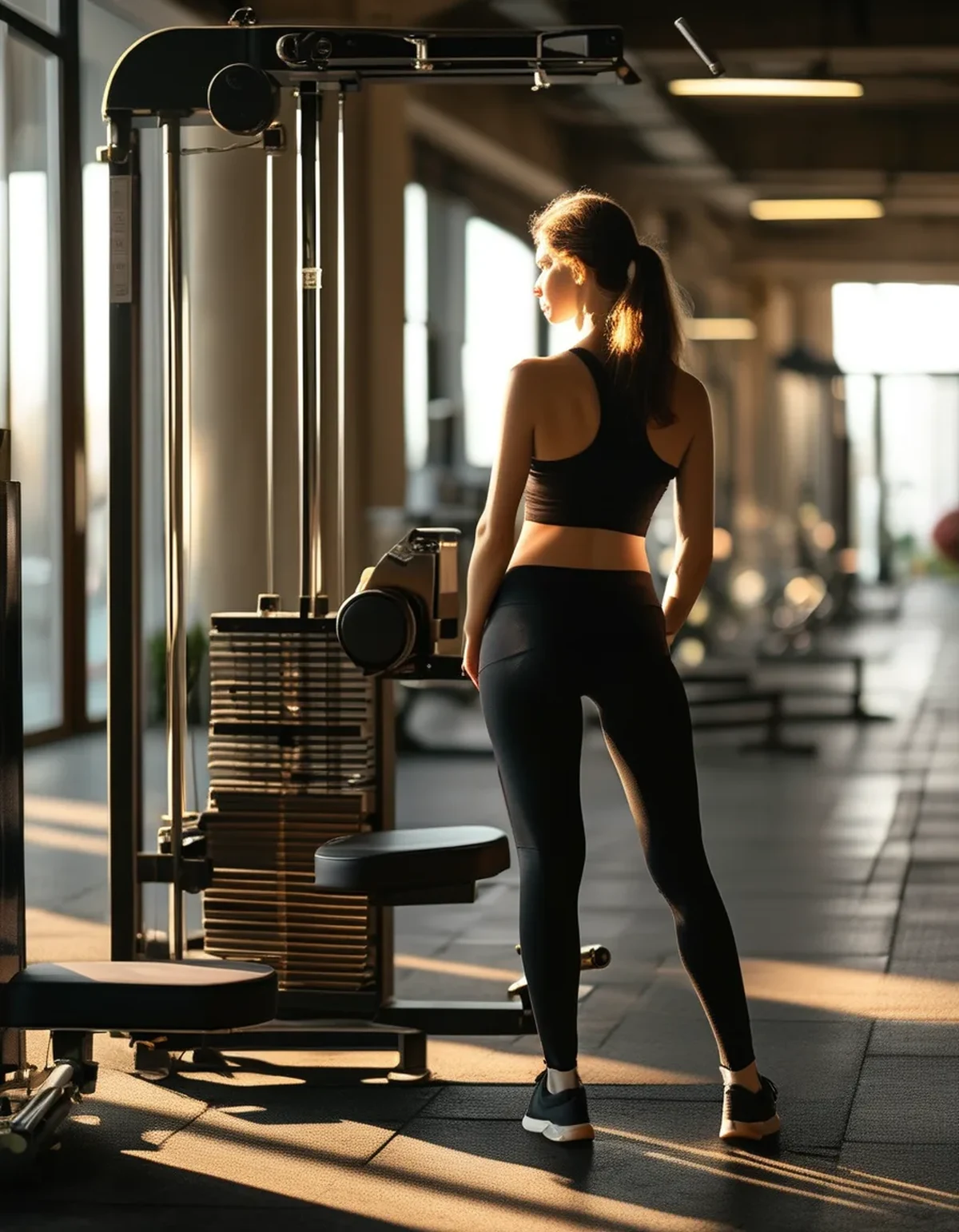
Almost every selectorised machine has a visible axis of rotation, a pivot point where the moving arm connects to the frame. That pivot is designed to line up with a specific joint in your body.
Sit or stand in the machine and find where the pivot sits relative to you. If it lines up with your elbow, it is an elbow machine, so a curl or a triceps extension. Beside your shoulder, a shoulder machine. Beside your knee, a leg extension or leg curl. Beside your hip, a hip machine, so an abduction, adduction or extension pattern.
Some machines have two pivots or a compound linkage, which usually indicates a multi-joint movement: a chest press, a row, a pulldown, a leg press.
The practical instruction that follows is the single most important setup rule in the gym: adjust the seat until the machine’s pivot is level with your joint. Almost every complaint about a machine feeling wrong, hurting, or working the wrong muscle traces back to a mismatch here.
If you cannot find a pivot at all, you are probably looking at a cable machine or a plate-loaded press where the path is linear rather than rotational, and the next step will tell you what it does.
Step two: read the direction of resistance
Sit in the machine and move the arms through their range without any weight selected. The direction you have to push or pull against tells you the movement pattern immediately.
Pushing away from your chest, horizontally: a chest press, so chest, front delts and triceps. Pushing overhead: a shoulder press. Pulling toward your chest, horizontally: a row, so mid-back and biceps. Pulling down from above: a pulldown, so lats and biceps.
Straightening the knee against resistance: leg extension, quadriceps. Bending the knee against resistance: leg curl, hamstrings. Pressing both legs away: leg press, quads, glutes and hamstrings together.
Bringing arms together in front: a chest fly, pectorals. Pushing arms apart: a reverse fly, rear delts and mid-back.
The rule that covers all of it: the muscle that shortens as you move against resistance is the muscle being trained. Move the arm slowly and feel which part of you is doing the work. That is the answer, and it is more reliable than any diagram.
Watch the return path too. A machine that resists in both directions, or that has a noticeable eccentric load, is training the muscle through both phases and warrants slower control on the way back.

Step three: read the contact points and the constraints
Where the machine touches you tells you where force is applied and what it is trying to prevent you from doing.
A chest pad on a rowing machine exists to stop you using your lower back and momentum, which tells you the machine wants isolation of the back musculature. A thigh pad on a pulldown stops you standing up under load. A shoulder pad on a calf or shrug machine transmits the load through the skeleton rather than the hands.
Handle position and grip orientation matter a great deal on multi-joint machines. Neutral grips, palms facing each other, generally shift emphasis and are often more shoulder-friendly on presses and rows. A wider grip on a pulldown emphasises the lats differently from a narrow one, and many machines offer both on the same bar.
Foot plates and platforms tell you whether the machine expects you to brace against the ground or whether the legs are simply out of the way.
And the adjustments themselves are informative. A machine with a back pad that moves fore and aft is telling you that range of motion is meant to be set to your arm length. One with only a seat height adjustment is expecting the pivot alignment to be the only variable that matters.
Step four: read the cable path and where the load peaks
On a selectorised machine, look at how the cable runs from the weight stack over the pulleys to the moving arm. The geometry determines where in the range the exercise is hardest, and that is often the difference between two machines with the same name.
A machine with a round pulley produces roughly constant torque and the difficulty follows your own leverage, usually hardest in the middle of the range.
A machine with a visibly non-circular cam, an egg or teardrop shape, is deliberately varying the resistance through the range to match the strength curve of the muscle. That is generally a sign of a better-designed machine, and it explains why a cam-equipped chest press feels evenly hard throughout while a cheap one feels easy at the top.
Plate-loaded machines with a direct linkage and no cable often peak in resistance where the lever arm is longest, which is usually in the stretched position.
The practical use of this: if a machine feels trivially easy at the end of the range and brutal at the start, it is loading the stretched position, which is a different stimulus from a machine that peaks at contraction. Neither is wrong and knowing which you are using explains why two machines with the same name train differently.
And if the cable path looks frayed, kinked, or the stack does not return smoothly, tell staff and use something else.
FAQ: Reading Unfamiliar Machines, Answered
What if I set it up wrong?
You will usually feel it immediately as pinching, an awkward range, or the wrong muscle working. Stop, adjust one thing at a time, and retest with a light weight. Nobody notices and nobody minds.
Should I just ask a member of staff?
Yes, and it is the fastest route. Staff are generally happy to be asked and the answer takes thirty seconds. Reading the machine yourself is the fallback and the more transferable skill.
Why do the same-named machines from two brands feel so different?
Different cam geometry, different pivot placement and different starting positions. Weight numbers are not comparable between machines either, so a number that felt heavy on one machine means nothing on another.
How do I know the seat height is right?
The machine’s pivot should sit level with the joint it is moving, and your range of motion should feel full without any position where you feel pinched or stretched at the end.
Is it worth using machines at all if I lift free weights?
Yes, particularly for single-joint work, for training close to failure safely without a spotter, and for adding volume with less systemic fatigue.
TL;DR:
- Find the pivot and match it to the joint it sits beside; then set the seat so they line up.
- Move the arm unloaded and feel which direction resists you; the muscle that shortens is the target.
- Contact pads tell you what the machine is preventing, and grip options change emphasis.
- The cam shape and cable path tell you where in the range the load peaks.
- Weight numbers do not transfer between machines or brands, so re-find your load every time.
Four features, fifteen seconds, and no sticker required.
Keep Reading
This article is for general informational and styling purposes only. Fit, sizing, and product availability may vary.