What to Do When You Are Between Two Seat Settings on a Machine
Quick Answer: Pick the setting that puts the machine’s axis of rotation in line with the working joint - that is what the seat height is actually for. When you are between two, choose the one that protects the more vulnerable joint: on pressing machines go slightly lower to keep the shoulder out of an overhead impingement position, on pulldowns and rows go slightly tighter to keep the pad or chest support doing its job, and on leg machines go with the setting that keeps the knee behind the axis rather than in front of it. Then use towels, pads, or foot plates to close the remaining gap.
This is one of the most common unresolved gym annoyances, and being between settings is not a personal defect - it is a design limitation, and it affects taller and shorter people most.
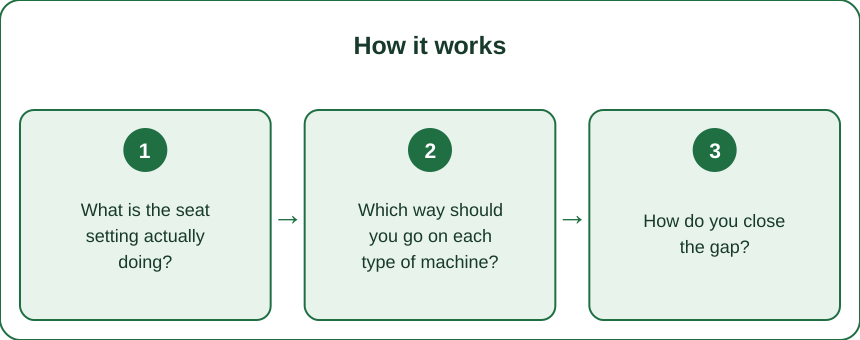
What is the seat setting actually doing?
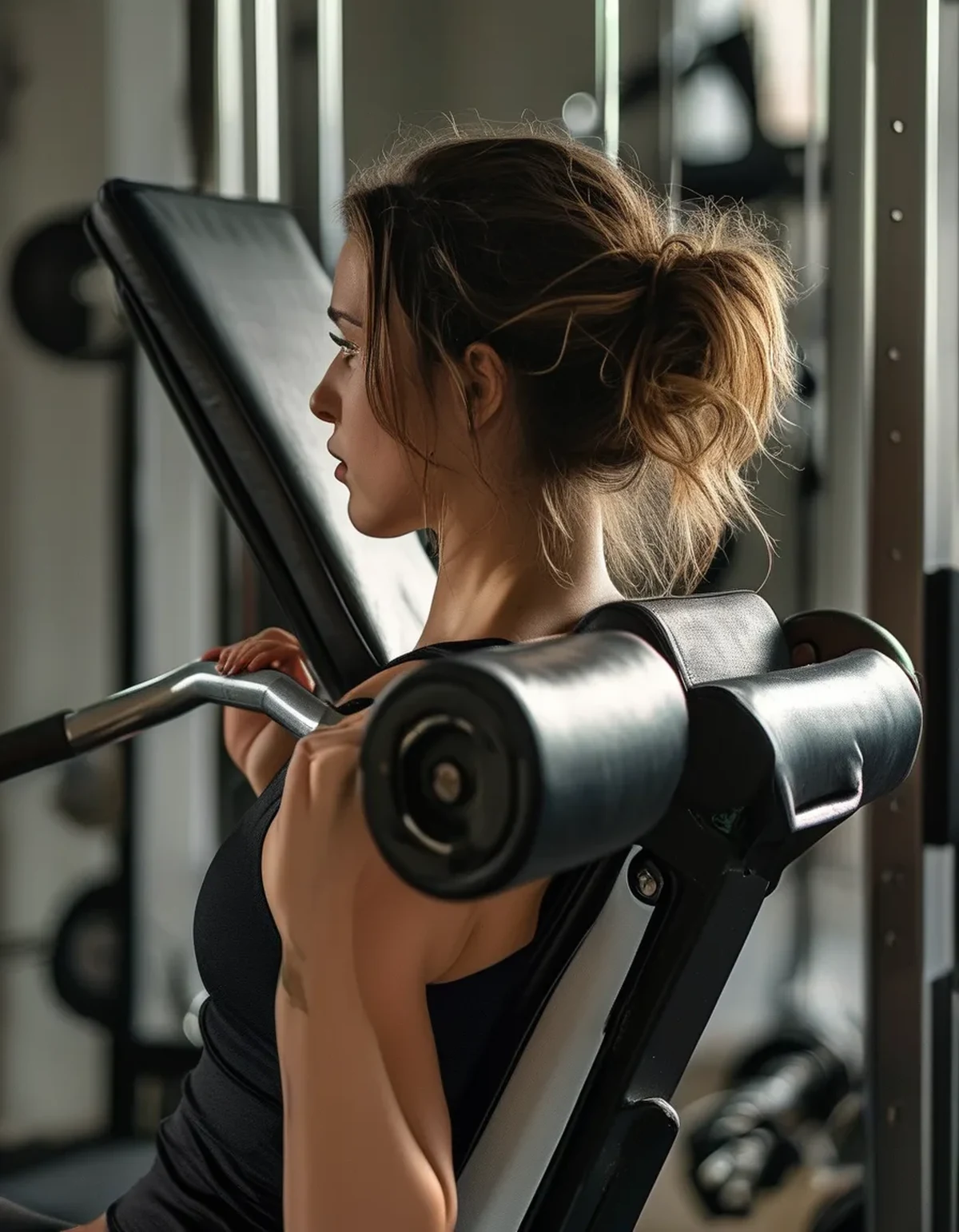
Aligning your joint with the machine’s pivot. Every hinged machine rotates around a fixed axis, and the whole design assumes your elbow, shoulder, knee, or hip sits on that axis. When it does, the resistance curve matches your strength curve. When it does not, the load moves to the wrong part of the range.
Misalignment does not usually feel dramatic. It feels like the machine is slightly awkward, or that one part of the range is disproportionately hard, or that you feel it in a joint rather than a muscle.
On pressing machines the setting controls shoulder angle. Too high a seat means pressing at an upward angle, moving the shoulder towards an overhead position under load.
On pulldowns and rows the pad or support controls whether you can generate force. A thigh pad too loose lets you lift off the seat; a chest pad too far away lets you use momentum.
On leg machines the setting controls knee position relative to the axis, which determines how much shear the knee takes.
And in every case the machine was designed around a population average. If you are notably tall, short, long-limbed, or short-torsoed, being between settings is the normal outcome rather than an exception.
Which way should you go on each type of machine?
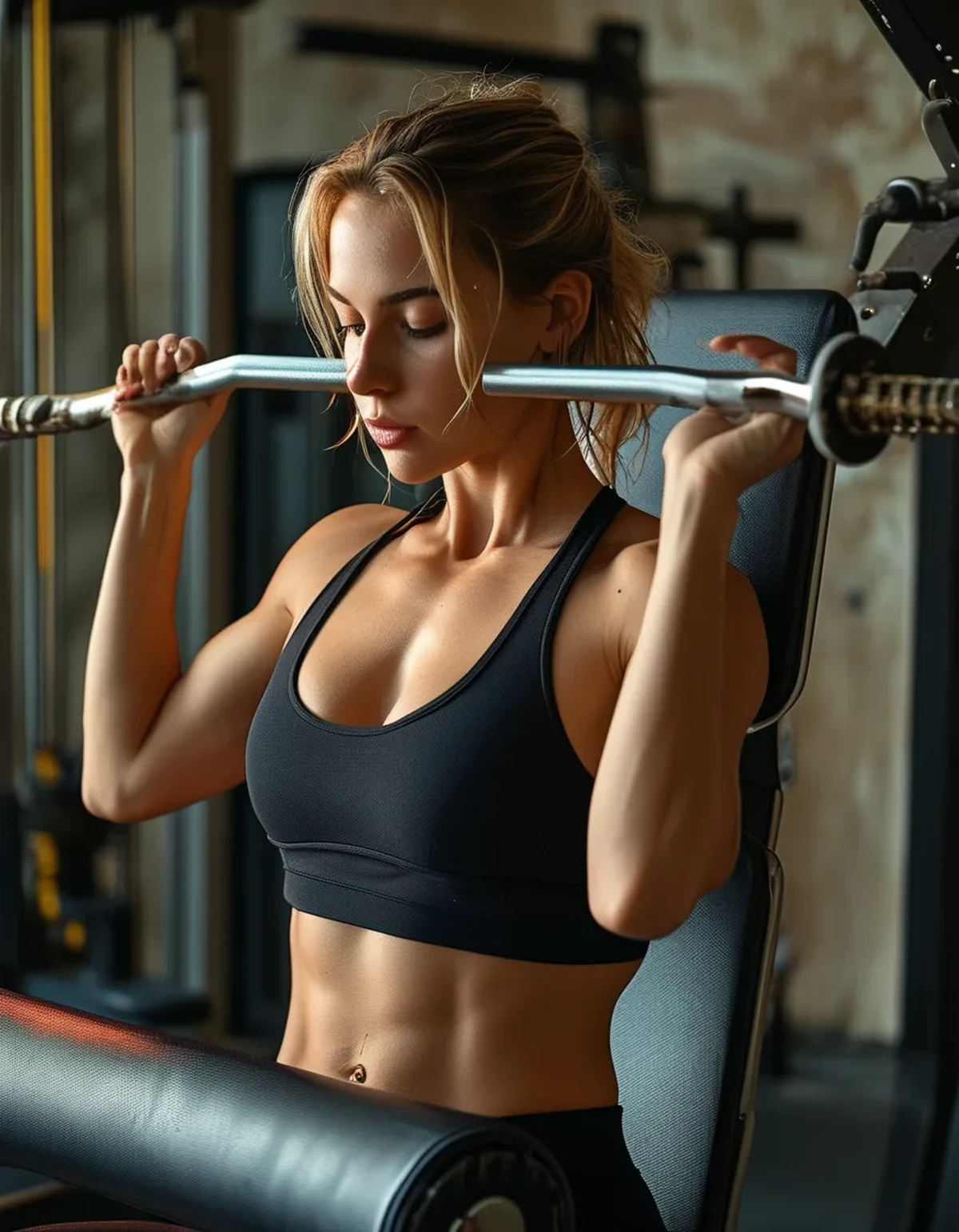
Chest press and shoulder press: go lower. The handles should sit at roughly mid-chest or nipple height for a chest press, and a seat that is too low simply makes it a slight decline press, which is well tolerated. Too high pushes the shoulder into a more vulnerable position under load.
Lat pulldown: go tighter on the thigh pad. Snug is right. If you are between, choose the tighter setting and accept the mild discomfort - a loose pad means your bodyweight lifts off the seat and the exercise changes entirely.
Seated row with a chest pad: go closer. A pad you have to reach for lets you round forward and pull with your lower back. If it is genuinely too close to allow full range, that is the one case to go further away.
Leg extension: prioritise knee alignment over back position. The knee should sit directly on the machine’s axis; if you are between settings, choose the one that puts the knee slightly behind the axis rather than in front.
Leg press: go with more knee flexion available rather than less, but stop well short of the lower back rounding off the pad. Back position is the limit, not depth.
Preacher curl and pec deck: the elbow or shoulder should sit on the axis. Between settings, take the lower one on a preacher so your armpit stays in contact with the pad.
How do you close the gap?
A folded towel on the seat is the most useful item in the gym for this. It raises you by one to three centimetres depending on the fold, which is usually exactly the distance between two settings.
A weight plate or a step under your feet fixes the other half. If raising the seat leaves your feet dangling, put something under them - unsupported feet cost you stability and force production on almost every seated machine.
A pad behind your back moves you forward on a machine with a fixed backrest, which effectively changes your reach without touching the seat.
Change your grip position. On many pressing and pulldown machines, moving your hands in or out along the handle changes the effective geometry more than one seat notch does.
Use the other machine. Most gyms have two or three ways to train the same pattern, and one of them will fit you properly. Being between settings on the chest press does not mean pressing is off the table.
And swap to a free-weight or cable version when the machine simply does not fit you. Cables and dumbbells have no fixed axis, so they accommodate any limb length. For people at the extremes of height this is often the real answer rather than a compromise.
5 Mistakes People Make With Machine Setup
1. Using whatever setting the last person left. The most common error in any gym. It takes five seconds to change and it is the difference between training the muscle and irritating the joint.
2. Setting up by comfort rather than by alignment. The comfortable setting is often the one where the machine does less work through the range. Check where your joint sits relative to the pivot, then judge comfort.
3. Alternating between two settings from session to session. This makes progress impossible to track, because a change in the weight moved may just be a change in leverage. Pick one, write it down, and keep it.
4. Assuming the same number means the same thing on a different machine. The third mistake catches out people who switch gyms - setting 5 on one brand’s chest press is nothing like setting 5 on another’s, and the numbers are not standardised in any way.
5. Ignoring foot position entirely. Unsupported or badly placed feet reduce stability on every seated machine, and it is the adjustment nobody thinks of as an adjustment.
A sixth: not rechecking the setting after a break. If you have been away over summer or training outdoors, re-verify your settings rather than trusting the number you remember - shoes change, and so does how you sit.
How do you know when you have got it right?
The movement feels smooth through the whole range, with no dead spot and no point where it suddenly gets much harder. A pronounced sticking point in an odd place usually means misalignment rather than a weakness.
You feel it in the target muscle rather than in a joint. Feeling a chest press in the front of the shoulder is a setup signal, not a training signal.
You can reach full range without your body compensating. No lifting off the seat, no rounding of the lower back, no shrugging at the top.
Both sides feel the same. A machine that feels different left to right is often a setup issue - sitting slightly off-centre - rather than a genuine strength imbalance.
Write the number down. Keep the setting in your training notes alongside the weight. This is what makes progression trackable and it takes two seconds.
And expect it to change with the season. As training moves indoors and shoes change from thick-soled outdoor trainers to flat gym shoes, seated leg machine settings genuinely shift by a notch. If a machine that felt perfect in July feels wrong now, check what is on your feet before assuming anything about the machine.
This is general information, not medical advice. Persistent joint pain during a movement needs assessment rather than another adjustment.
FAQ: Machine Setup, Answered
Is it bad to be between two settings?
No, and it is extremely common. Machines are built around population averages, so anyone tall, short, or unusually proportioned will be between settings on something. A towel and a foot plate close most gaps.
Which way should I err on a chest press?
Lower. A slightly low seat makes it a mild decline press, which is fine. A high seat moves the shoulder towards an overhead position under load.
Do the numbers mean anything across brands?
No. They are arbitrary per machine and per manufacturer. Record the setting per machine, not as a general number.
Should I just use free weights instead?
If you are at the extremes of height, often yes for some movements - cables and dumbbells have no fixed axis and accommodate any limb length. It is a legitimate answer rather than an admission of defeat.
Why does a machine feel different on the left and right?
Check you are sitting centred and that both feet are placed identically before concluding you have a strength imbalance. Setup asymmetry explains a lot of apparent asymmetry.
TL;DR:
- The seat setting exists to line your joint up with the machine’s pivot - that is the criterion, not comfort.
- Between settings, err lower on pressing machines, tighter on pulldown thigh pads and row chest pads, and knee-behind-the-axis on leg extensions.
- Close the gap with a folded towel on the seat and a plate or step under your feet; unsupported feet cost stability on every seated machine.
- Pick one setting and write it down - alternating makes progress impossible to read.
- Setting numbers are arbitrary and mean nothing across brands or gyms.
And recheck your settings now that sessions have moved indoors. Flat gym shoes instead of thick-soled outdoor trainers genuinely moves a leg machine setting by a notch.
Keep Reading
This article is for general informational and styling purposes only. Fit, sizing, and product availability may vary.