When the Machine Runs Out of Range Before You Do
Quick Answer: Machines constrain your joints to a fixed path built around average limb proportions. If your femur, forearm, or torso is longer or shorter than that average, you will hit the machine’s end stop before your working range ends, or you will be forced into a start position your joint cannot reach safely. Seat height, back pad depth, and start-range pins fix perhaps two thirds of these cases. For the rest, the correct answer is a different machine or the free-weight equivalent - not forcing your body into the path.
You set the seat. You set the pad. You still finish the rep two inches before the muscle finishes working.
Or worse, the start position pulls your shoulder somewhere it clearly does not want to go.
Why do machines fit some bodies and not others?
A machine defines a single joint path. Unlike a dumbbell, which lets your joints negotiate the movement in real time, a machine’s pivot point and lever length are fixed at manufacture around a population average.
Limb length ratios vary far more than height does. Two people of identical height can have substantially different femur-to-torso ratios, and that ratio is what determines whether a leg press or a seated row fits.
The critical detail is pivot alignment. On any rotary machine - leg extension, leg curl, lateral raise - your joint’s axis must line up with the machine’s axis. If it does not, the resistance curve is wrong and the range is wrong regardless of how the seat is set.
Manufacturers design around different populations. This is why a machine from one brand fits you and the equivalent from another does not, and it is a real difference rather than a preference.
Older machines were often built around a narrower assumed range, which is why a well-maintained but dated gym can be genuinely harder to fit than a newer one with more adjustment points.
And plate-loaded machines usually offer more range than selectorised ones, because the cam design is simpler and the start position is often less constrained.
Which adjustments actually change the range?
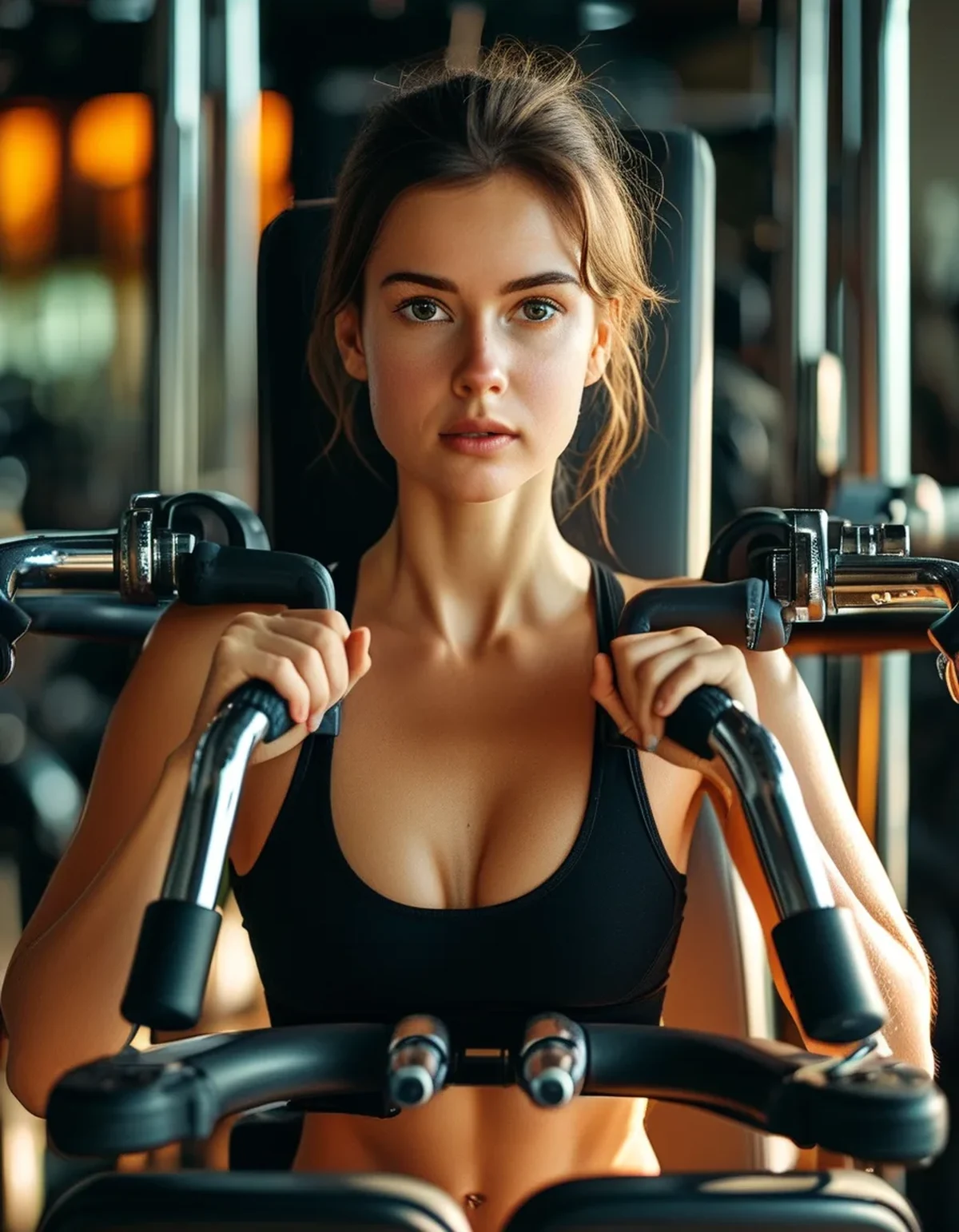
Seat height is the primary control on most machines, and it is what aligns your joint with the pivot. Set it so the machine’s axis is level with the joint doing the work - knee for extensions and curls, shoulder for pressing and rotary movements.
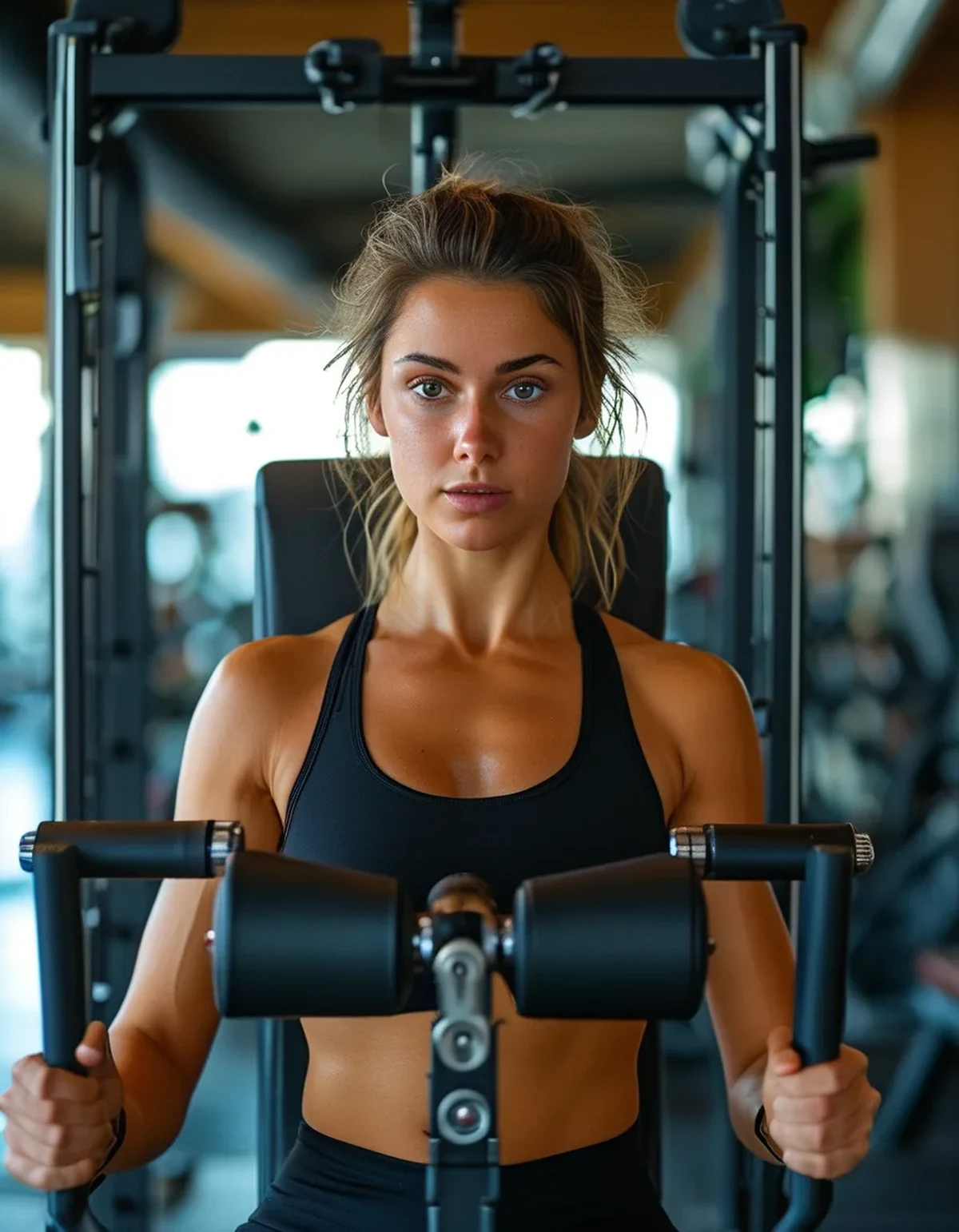
Back pad depth changes your effective torso position and therefore your reach on any pressing or rowing machine. Moving the pad forward shortens the start position; moving it back lengthens it.
Range-of-motion pins are the most underused feature in the gym. Many machines have a pin or lever that sets the starting angle, letting you begin from a longer or shorter position. Most people never touch it, and it is often the exact adjustment they need.
Handle and lever arm position matters on rowing and pressing machines, where a rotatable handle changes both the range and which part of the muscle takes the load.
Foot plate position on leg press and hack squat changes the ratio of knee to hip contribution, and moving your feet higher or lower does more than any seat adjustment on those machines.
Work through the full range unloaded first. Sit in, set what you can, and move the machine through a rep with no weight. You will find the mismatch in five seconds rather than in the middle of a working set.
And write your settings down. Seat five, pad three, pin two takes a moment to record and saves you the same fifteen-second fiddle every session for the next year.
What to do when adjustment is not enough
Use partial range deliberately rather than accidentally. If the machine gives you a good, safe portion of the movement, train that portion under control and get the rest elsewhere. A partial rep chosen on purpose is a legitimate tool.
Switch to the free-weight equivalent for the missing range. If a chest press machine stops short of a full stretch, dumbbell pressing gives you the stretch the machine cannot. The two are complements rather than competitors.
Try the cable version. Cables offer a fixed resistance direction with a free joint path, which is exactly the combination that solves most machine-fit problems - and they suit taller and shorter lifters far better than fixed machines do.
Look for the same movement on a different brand’s machine in the same gym. This resolves more cases than people expect, because assumed proportions differ meaningfully between manufacturers.
Never add padding to force a fit unless the machine is designed for it. Stacking towels behind your back to reach a handle changes the pivot alignment and usually creates a worse problem than the one you were solving.
And take the start position seriously. A machine that forces your shoulder into deep external rotation before the rep begins is a machine to walk away from, regardless of how the rest of the movement feels. Range problems are an inconvenience; start-position problems are how people get hurt.
5 Signs the Machine Does Not Fit You
1. You hit the stop before the muscle stops working. The clearest sign, and the easiest to mistake for the set being finished. If the machine ends the rep rather than the muscle, the range is short for you.
2. You have to shift or lift off the pad to complete a rep. Your body is compensating for a path it cannot follow. This shows up as a small hip lift on leg press or a shoulder rolling forward on chest press.
3. The joint being trained is not level with the machine’s pivot even at the extremes of seat adjustment. This is a hard no - the resistance curve will be wrong through the entire range.
4. One side reaches further than the other. Usually a seat or handle asymmetry rather than a body one. Check the machine before concluding anything about yourself.
5. The start position feels like a stretch you did not choose. Particularly on chest and shoulder machines. A start position that pre-stretches the joint is the setup most associated with irritation over time.
And the sign that is not on the list: the machine feeling hard. Difficulty is not a fit problem. Fit problems feel like the machine is arguing with your joints rather than loading your muscles.
FAQ: Machine Fit and Range, Answered
Why does the machine stop before my muscle is finished?
The lever length and end stop are built around average limb proportions. If your limbs are longer or shorter than that average, you reach the mechanical stop before your working range ends.
What should I adjust first?
Seat height, to align your working joint with the machine’s pivot. Everything else - pad depth, start pin, handle position - is a refinement on top of correct pivot alignment.
What is the range-of-motion pin for?
It sets the starting angle so you can begin from a longer or shorter position. It is the most commonly ignored adjustment and often the exact one that fixes a fit problem.
Should I use towels or pads to make a machine fit?
No, unless the machine is designed for it. Improvised padding changes pivot alignment and usually creates a new problem while masking the original one.
Is a partial range on a machine still worth doing?
Yes, if you choose it deliberately and get the missing range from another exercise. A controlled partial is a legitimate tool; an accidental one is just a short rep.
What is the best alternative when nothing fits?
Cables. A fixed resistance direction with a free joint path suits bodies outside the assumed average far better than any fixed machine, and the same movement is almost always available.
TL;DR:
- Machines fix a joint path around average limb proportions; if yours differ, you hit the end stop before the muscle finishes.
- Align your working joint with the machine’s pivot using seat height first - everything else is refinement.
- The range-of-motion pin is the most ignored adjustment and often the one that solves it.
- Run through a rep unloaded before your first set, and write your settings down.
- If it still does not fit, use cables or the free-weight equivalent rather than forcing the path.
A start position that pre-stretches a joint is worth walking away from, not working around.
Keep Reading
This article is for general informational and styling purposes only. Fit, sizing, and product availability may vary.