The Lat Pulldown Mistake That Trains Your Arms Instead of Your Back
Quick Answer: Feeling the lat pulldown mainly in the biceps usually means the movement is being initiated by pulling with the arms first — the fix is starting each rep by driving the elbows down and back before the hands move significantly, which shifts the load onto the lats instead.
The weight moves, the rep counts, but the burn shows up in the arms, not the back. That’s a sequencing problem, not a weakness problem, and it has a specific fix.

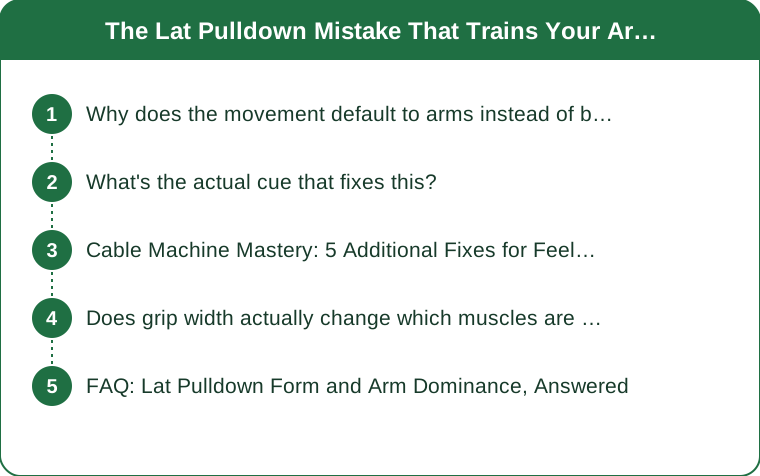
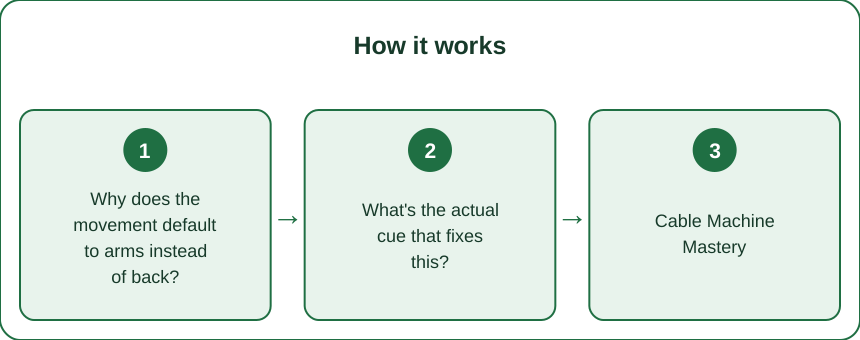
Why does the movement default to arms instead of back?
Arms are a smaller, faster-firing muscle group, so without deliberate cueing, the body naturally recruits biceps first to initiate the pull since they’re mechanically quicker to engage than the larger, slower lats. Left unchecked, this becomes the default pattern on every rep.
What’s the actual cue that fixes this?
‘Elbows down and back, not hands down’ — initiating the pull by driving the elbows toward the hips, almost like trying to put them in your back pockets, shifts the initial pulling force to the lats before the arms get involved at all. The hands should feel like hooks, not the primary pulling mechanism.

Cable Machine Mastery: 5 Additional Fixes for Feeling Lats, Not Arms
1. Widen the grip slightly if using a wide bar — too narrow a grip increases bicep involvement. 2. Slow the eccentric (releasing) phase to 2-3 seconds, which increases time under tension for the lats specifically. 3. Pause briefly at the bottom of the pull before releasing, reinforcing the lat squeeze. 4. Reduce weight temporarily if the current load requires arm compensation to complete reps. 5. Add a slight torso lean back (not excessive) at the start of the pull to better align the pulling angle with the lats.
Does grip width actually change which muscles are emphasized?
Yes, somewhat — a wider grip tends to emphasize the upper lats and reduce bicep dominance slightly, while a narrower or underhand grip naturally increases bicep involvement. Neither is wrong, but grip choice should match the specific training goal.
FAQ: Lat Pulldown Form and Arm Dominance, Answered
Is it normal to feel some arm engagement even with correct form?
Yes — biceps assist in any pulling movement; the goal is shifting the primary sensation to the back, not eliminating arm involvement entirely.
Should the weight be reduced while relearning correct lat pulldown form?
Usually yes — dropping weight temporarily to focus purely on the elbow-driven cue helps build the correct movement pattern before adding load back.
Does this same ‘elbows first’ cue apply to pull-ups too?
Yes — the same elbow-driven initiation cue transfers directly to pull-ups and other vertical pulling movements.
TL;DR:
- Arm-dominant lat pulldowns usually come from initiating the pull with the hands, not the elbows
- Cue ‘elbows down and back’ first to shift the load onto the lats before arms engage
- A slower eccentric phase and brief pause at the bottom reinforce the correct muscle emphasis
- Grip width also plays a role — wider grips lean more toward lat emphasis
The fix isn’t more weight or more reps — it’s which body part leads the pull.
Keep Reading
This article is for general informational and styling purposes only. Fit, sizing, and product availability may vary.