The One Adjustment Everyone Skips Before Using Gym Machines
Quick Answer: Machines are adjusted once by whoever used them last, and skipping a quick re-check before your set means training through someone else’s joint angles — the single most common cause of machines “just not feeling right” for no obvious reason.
You sit down, load the weight, and something feels slightly off — not painful, just not quite right. Nine times out of ten, the seat or pad is still set for the person before you, and nobody checks before starting.

Why does skipping the seat check matter so much?
Every machine is engineered around a specific joint angle at the pivot point — a leg press, lat pulldown, or chest press all assume your joint lines up with the machine’s mechanical axis. Even an inch of seat misalignment shifts that angle enough to reduce the muscle being targeted and increase strain on the wrong joint.
What happens if you train on a machine set for someone else?
Best case, the exercise just feels less effective — reduced range of motion or awkward leverage. Worse case, repeated sets with a misaligned joint angle add up to nagging joint strain over weeks, especially on machines with a fixed, non-adjustable range of motion like some leg press or chest press models.
What’s the 10-second check to do before every set?
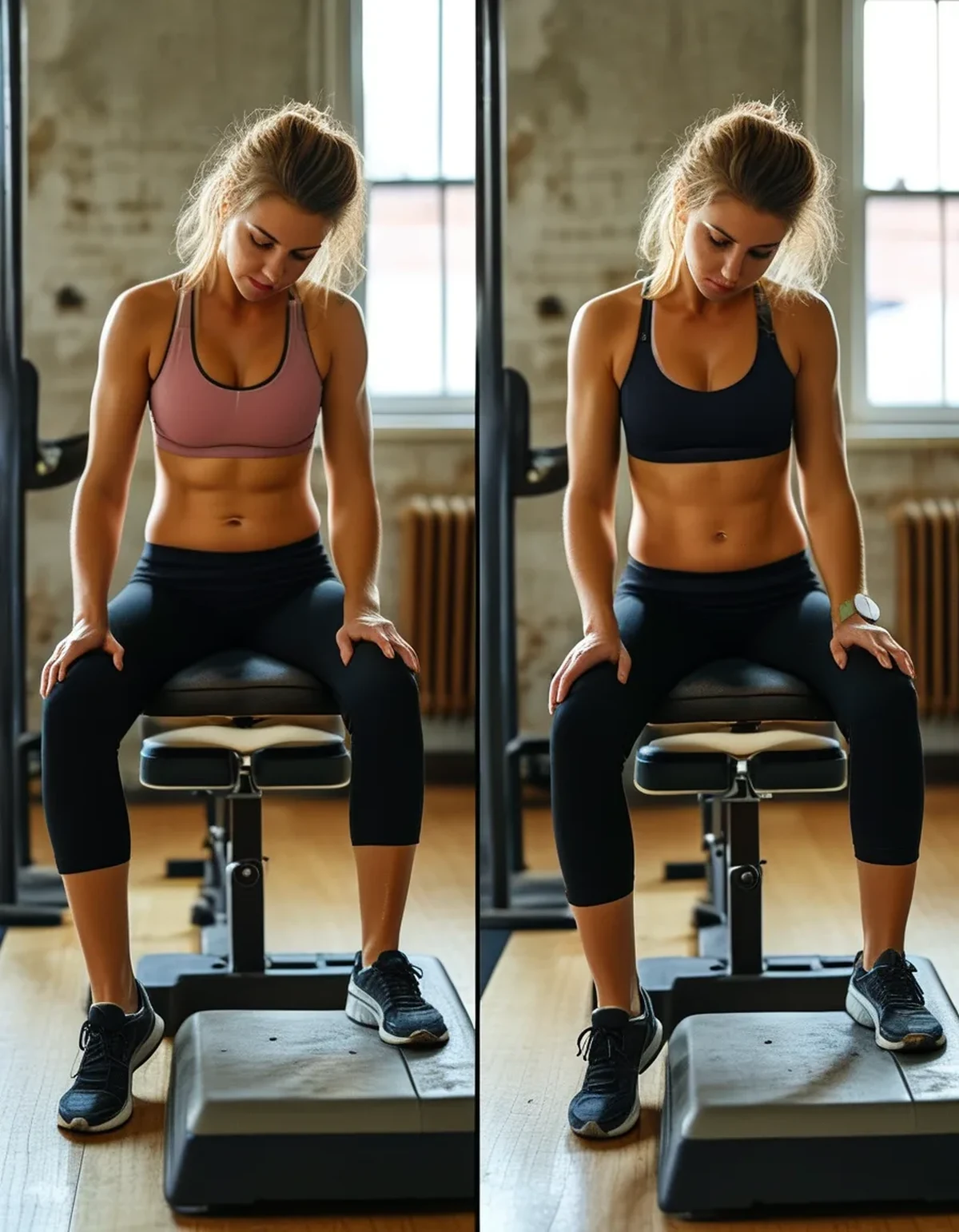
Before adding weight, sit in the machine and check that the pivot point (knee on leg press, shoulder on chest press, etc.) lines up with the machine’s mechanical joint — most machines have a small marker or obvious hinge point to reference. Adjust the seat, not your body position, to make that alignment happen.
Myth vs Fact: Gym Machine Adjustment
Myth: If the machine feels okay, the setting is probably fine. Fact: Small misalignments often feel “fine” while still reducing effectiveness — feeling okay isn’t the same as being correctly aligned.
Myth: Only tall or short people need to adjust machines. Fact: Everyone’s proportions differ enough that machines set for the previous user rarely match the next person by coincidence, regardless of height.
Myth: Re-checking every set wastes time. Fact: It takes under 15 seconds and prevents both reduced training effect and unnecessary joint strain — the time cost is negligible next to the benefit.
FAQ: Gym Machine Adjustment Questions, Answered
How do I know if a machine seat is adjusted correctly for me?
Your major joint (knee, shoulder, hip depending on the machine) should align with the machine’s visible pivot point — most machines mark this with a dot, line, or obvious mechanical hinge.
Does seat height matter more than seat depth on machines?
Both matter, but height usually has the bigger effect on joint alignment — depth mainly affects comfort and range of motion, height affects whether the joint tracks the machine’s arc correctly.
Is it rude or unusual to re-adjust a machine after someone else used it?
No — every gym expects machines to be readjusted per user; it’s standard, expected practice, not an imposition on anyone.
TL;DR:
- Machines are engineered around a specific joint pivot point
- Skipping the seat check trains through the last person’s settings
- The fix takes under 15 seconds — align your joint to the machine’s marker
- Re-adjusting every time is standard practice, not an inconvenience
One 10-second check before every set is the difference between training the target muscle and just going through the motion.
Keep Reading
This article is for general informational and styling purposes only. Fit, sizing, and product availability may vary.