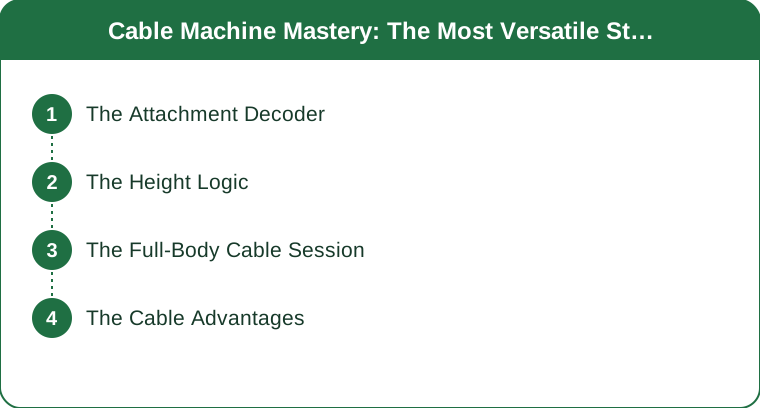
Cable Machine Mastery: The Most Versatile Station in the Gym
The cable station is the gym’s most versatile machine and its most under-used — the attachment bucket mystifies, the height settings intimidate, and everyone does the same one pushdown. The mastery guide: the attachments, the heights and the full-body session from one station.
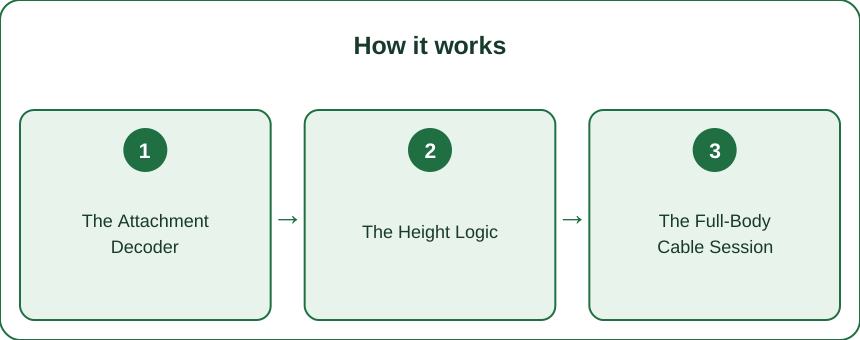
The Attachment Decoder
The bucket, translated: the rope (the versatile champion — pushdowns, face pulls, hammer curls and the overhead extensions; the neutral-grip attachment that suits most joints), the straight-and-EZ bars (the curls-and-pushdowns classics — the fixed grips for the standard moves), the single handles (the unilateral world — one-arm rows, presses and the asymmetry-fixing tier; the pair that unlocks half the station’s value), the wide-and-lat bars (the pulldown station’s furniture), and the ankle strap (the lower-body secret — cable kickbacks, abductions and the glute work that machines-row neglects; the attachment nobody uses and everyone should try).
The Height Logic
The settings, systematized: the low settings (cable at ankle — the upward pulls: curls, front raises, the cable squat-to-press tier and the glute kickbacks), the mid settings (cable at torso — the horizontal world: rows, presses, the Pallof press from the core chapter and the rotation work; the athletic-pattern zone), the high settings (cable overhead — the downward pulls: pushdowns, face pulls, lat work), and the learning frame (every exercise is just a direction-plus-attachment combination — the height sets the angle, the attachment sets the grip; two decisions, the whole station decoded; the settings that intimidated were a two-variable system all along).
The Full-Body Cable Session
One station, complete workout: the lower half (cable goblet squats — low setting, handle held at chest; cable Romanian deadlifts — the hinge with constant tension; the glute kickbacks and abductions via ankle strap), the upper pulls (the seated-or-standing row — mid setting; the face pull — high setting, the posture chapter’s cable version; the single-arm pulldown), the upper pushes (the cable chest press — mid, staggered stance; the pushdown and overhead extension pair), the core finish (the Pallof press and the cable woodchop — the anti-rotation and rotation pair from the golf-strength chapter), and the crowd honesty (the cable session shines at peak hours — one station claimed, the whole body trained; the packed-gym chapter’s best answer).
The Cable Advantages
Why cables earn the mastery: the constant-tension property (cables load the whole range — no lockout vacations; the time-under-tension that free weights’ gravity-lines can’t match on many angles), the angle freedom (any direction, any height — the joint-friendly chapter’s work-around toolkit lives here; the angle that doesn’t hurt exists on a cable), the progression smoothness (the pin moves in small steps — the micro-loading that dumbbells’ five-pound jumps deny), the safety profile (no bar to be trapped under, nothing to drop — the solo-training and beginner tiers’ friend), and the mastery payoff (the cable-fluent lifter is never equipment-blocked — the station that’s always half-empty because the bucket mystified everyone else; the two-variable system is the whole secret, and now it’s yours). Height plus attachment: mastered.
Rope and single handles first, height sets the angle, ankle strap is the secret, one station trains everything. The cable machine is a two-variable system — decode it and never queue again.
Keep Reading
This article is for general informational and styling purposes only. Fit, sizing, and product availability may vary.